Advertising Across Europe: Mastering Google Ads and Social Campaigns for International Growth
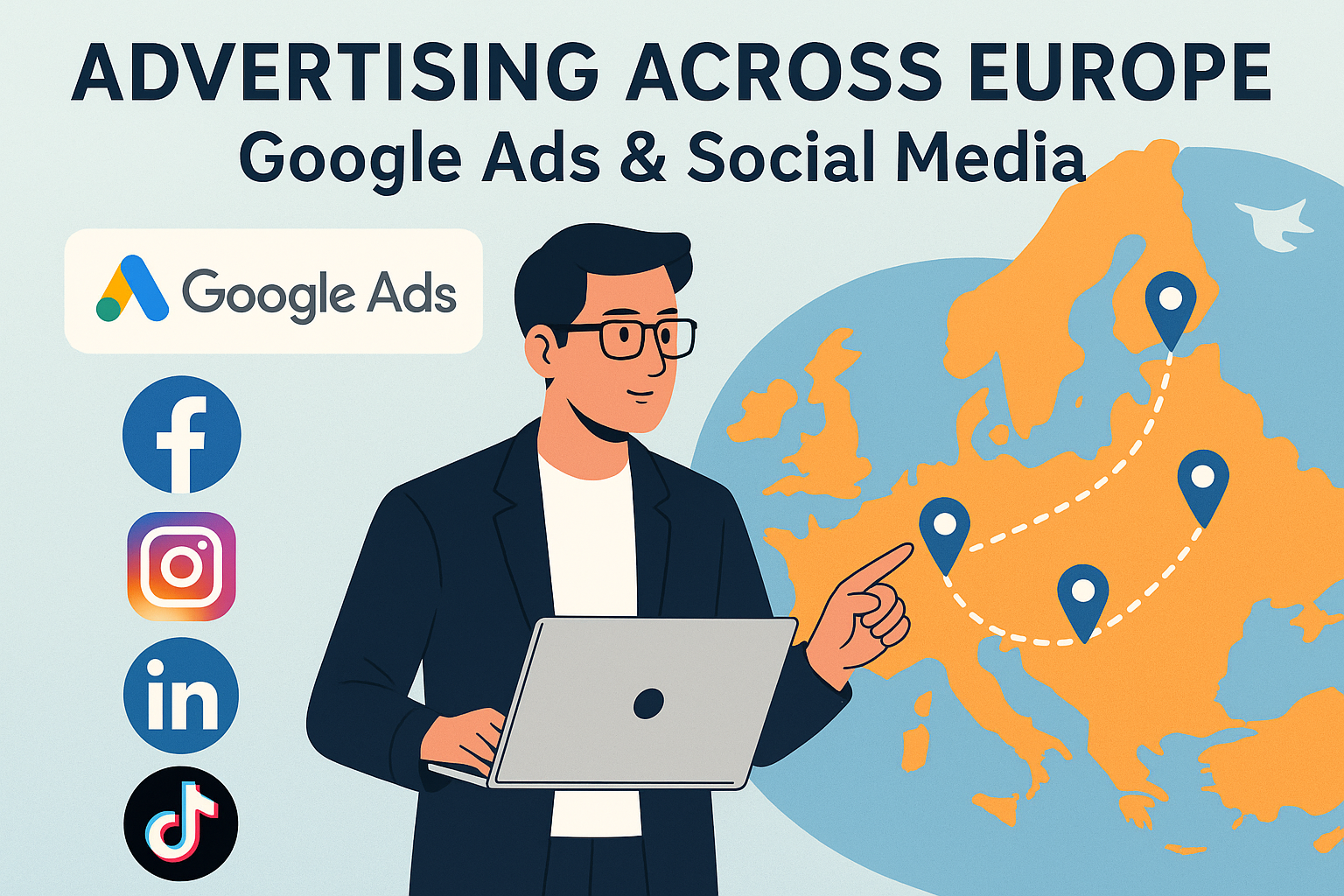
Running online ad campaigns in Europe isn’t just about translating your message into multiple languages. It’s about deeply understanding the regional nuances, regulatory landscapes, platform preferences, and buyer behaviors across countries. For international brands looking to expand their reach, Google Ads and social media advertising offer powerful opportunities—but only if executed with precision and strategy.
In this article, we’ll explore how to build successful ad campaigns across Europe using Google Ads and social channels like Meta (Facebook & Instagram), LinkedIn, and TikTok. Whether you're targeting a single country or the entire continent, these insights will help you build campaigns that convert.
1. Understanding the European Digital Landscape
Europe is not a monolith. A campaign that performs well in Germany might flop in Italy without cultural and linguistic adaptation. Your first step should be a market analysis of your target countries:
- Platform usage: While Google dominates across Europe, some countries have stronger adoption of Bing or privacy-focused search engines. On social media, Facebook and Instagram are broadly used, but LinkedIn performs better in B2B-heavy regions like the Netherlands or Scandinavia, while TikTok dominates youth demographics across Southern and Eastern Europe.
- Cultural differences: Humor, tone, and even colors can affect click-through rates. For example, formal language may work better in Germany, while a casual, emotional tone may resonate more in Southern Europe.
- Regulations: GDPR applies across the EU and must shape how you collect and handle user data. Also, local advertising rules may affect sectors like finance, health, or alcohol.
2. Structuring Your Google Ads for European Markets
Google Ads campaigns for international markets need careful segmentation. Start by creating separate campaigns per country or language group. This allows you to:
- Tailor ad copy in the local language and style.
- Adjust bidding strategies based on local competition and CPC benchmarks.
- Control budgets and performance tracking per region.
Use geo-targeting at the campaign or ad group level to ensure your ads appear in the right countries, and always localize landing pages to increase Quality Score and conversions.
Don’t forget to leverage Performance Max campaigns, which use AI to show your ads across the entire Google ecosystem. For multi-country targeting, set up separate asset groups per language or region to maintain relevance.
3. Leveraging Social Ads: Meta, LinkedIn & TikTok
Social media platforms offer powerful targeting options that work exceptionally well in Europe. Here’s how to approach each:
Meta (Facebook & Instagram)
With Meta Ads Manager, you can:
- Target by language, region, interests, behaviors, and even expats.
- Run A/B tests easily to see what messaging works best in each country.
- Use dynamic creatives and product catalogs for international eCommerce.
Keep in mind the ad formats that perform best: Reels, Stories, and carousels are especially effective for mobile-first audiences.
LinkedIn Ads
For B2B marketing in Europe, LinkedIn is a goldmine:
- Use company size, industry, and job titles to target decision-makers.
- Translate your message for local professionals—don’t assume English will always work.
- Sponsored InMail and lead gen forms perform well in regions like DACH and Benelux.
TikTok Ads
TikTok is growing rapidly in European markets:
- Run short-form, authentic creative content with localized trends and sounds.
- Use interest targeting and spark ads to boost organic performance.
- Collaborate with local influencers to build trust and recognition.
4. Localized Creative Strategy
Your ad visuals and messaging must resonate locally. This includes:
- Translating—not just the words—but the tone, idioms, and humor.
- Using localized imagery or models that reflect cultural diversity.
- Highlighting local benefits, such as regional shipping or payment methods.
If you want users to trust your brand, especially in new markets, your ads must feel native.
5. Measuring Results Across Borders
Tracking performance across multiple markets requires clear structure:
- Use UTM parameters for each country campaign so analytics stay clean.
- Segment Google Analytics and ad platform reports by region.
- Monitor language-specific conversion rates, bounce rates, and ROAS.
Also, be ready to adapt. What works in France today may not work next month. Keep testing ad copy, visuals, and CTAs.
6. Common Pitfalls to Avoid
- Auto-translation: Don’t rely solely on Google Translate. Use native speakers or transcreation experts.
- Single landing page strategy: Directing German and Spanish users to the same English page will hurt conversions.
- Ignoring time zones or holidays: Running ads during local holidays or outside business hours can waste spend.
7. Scaling Your Campaigns Across Europe
Once you find winning combinations in one market, you can scale horizontally to others. Use similar campaign structures and tweak only what’s needed:
- Adjust copy and imagery.
- Adapt offers based on regional pricing or regulations.
- Keep your reporting dashboards consistent for easy comparisons.
Outsource if needed. Many businesses work with freelance PPC and social ad experts who specialize in international campaigns. This can be a smart way to scale without hiring full-time staff.
Final Thoughts
Running Google Ads and social campaigns across Europe isn’t easy—but it’s one of the most rewarding strategies for businesses aiming for international growth. With the right research, localization, and ongoing optimization, your brand can attract and convert customers from London to Lisbon, Berlin to Bucharest.
Looking for help scaling your European advertising efforts? Whether you need campaign setup, localized strategy, or full ad management—partnering with experienced specialists can save you time, money, and costly trial-and-error.
ALL OUR OTHER NEWS: